Recovery should match the kind of fatigue you’re feeling
This guide helps you quickly identify what kind of recovery your body is asking for so you can give it the right recharge:
- Metabolic fatigue: You feel heavy, sluggish, mentally foggy, or low in energy
- Mechanical fatigue: You’re stiff, sore, or tight in specific areas
Matching your fatigue to the right therapy is what makes this approach so effective. Cold therapy, contrast therapy, red light therapy and infrared therapy all have a place, but their effectiveness depends on what you’re feeling and when you use them.

Protocol A: Metabolic fatigue
Follow this protocol if you’re experiencing these symptoms
- Heavy legs
- Lazy feeling in your body
- Lack of energy or ‘pop’ when you run
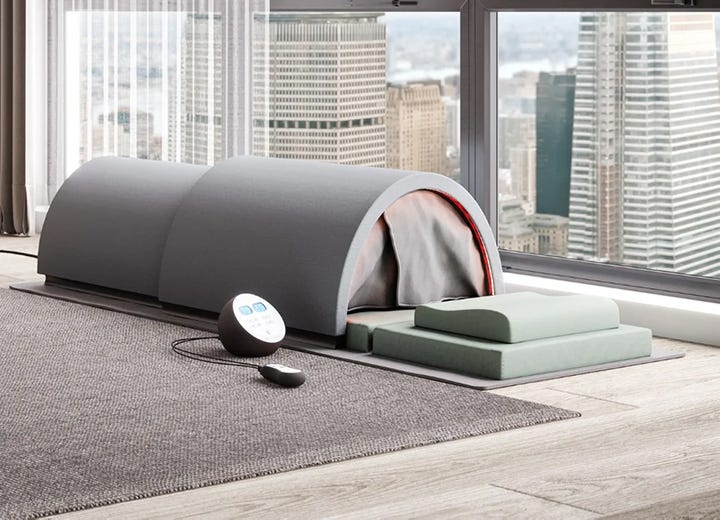
Treatment: Infrared sauna therapy
- Duration: 30-40 minutes
- Temperature: 110-140 degrees
Why it works
- Increases blood flow
- Increases hormonal response to help adapt to exercise stress
- Increases circulation, which helps the body process inflammation and recover
- faster because blood flow delivers nutrients and oxygen
- Penetrates the body to increase body temperature at lower temps, reducing chance of dehydration and energy drain
- Delivers photon energy to cells, helping to increase energy rather than drain it
Protocol B: Mechanical fatigue
Follow this protocol if you’re experiencing these symptoms
- Soreness
- Specific muscle soreness
- Muscle tissue damage
Treatment: Cold therapy or contrast therapy
- Alternating cold shower or ice bath
- Duration: 30 seconds – 2 minutes
- Infrared Sauna: 15 to 20 minutes at 110-140 degrees
Why it works
- Cold reduces blood flow and prevents inflammation
- Contrast therapy helps flush areas of the body and bring new oxygenated blood where needed
Red light therapy for muscle recovery: where it fits
Red light therapy is a helpful addition to a muscle recovery routine when you want more targeted support. It’s often used to support specific areas that feel overworked, tight, or are taking time to bounce back.
While infrared sauna has a systemic effect, red light therapy for muscle recovery provides more localized support. Together they create a fuller approach to feeling restored and recharged.